
About Me
My name is Parisa Kavianpour, and I am an Applied AI researcher interested in how intelligent systems can learn from complex, imperfect real-world data. I first encountered this challenge during my M.Sc. in Earthquake Engineering, where I worked with high-dimensional, chaotic seismic time-series. That experience, building deep learning models to discover hidden structure in noisy data, quickly became the foundation of my interest in AI research.
Since then, my work has evolved along two complementary directions: (1) developing practical AI solutions in industry, and (2) contributing to academic research on reliable machine learning.
In industry, I have worked as a Senior AI Research Developer, designing systems that directly impact users and businesses. These include RAG-based conversational agents, hybrid recommender systems, sentiment analysis pipelines using LLMs, and AI-driven automation tools for real-time insights. These projects strengthened my experience in NLP, generative AI, and end-to-end model deployment.
Alongside industry work, I maintain a strong academic involvement as a Research Assistant at Tarbiat Modares University. My research focuses on graph neural networks, domain adaptation under data limitations, and simulation-supported learning techniques. This work has resulted in multiple journal publications, including two recent Q1 papers, and continues to shape my interest in building AI models that remain robust in challenging environments.
Today, my main research motivation is understanding how AI can bridge the gap between controlled laboratory conditions and the messy, uncertain nature of real-world systems—whether in engineering, natural processes, or data-driven decision-making. I am always open to exploring new directions where AI can meaningfully contribute to scientific or industrial challenges.
Academic Stats
6
Publications
220+
Citations
4
h-index
As of November 2025, via Google Scholar.
Publications
A CNN-BILSTM Model with Attention Mechanism for Earthquake Prediction
Kavianpour, P., Kavianpour, M., Jahani, E., & Ramezani, A. (2023).
The Journal of Supercomputing, Springer. [Citations: 150+]
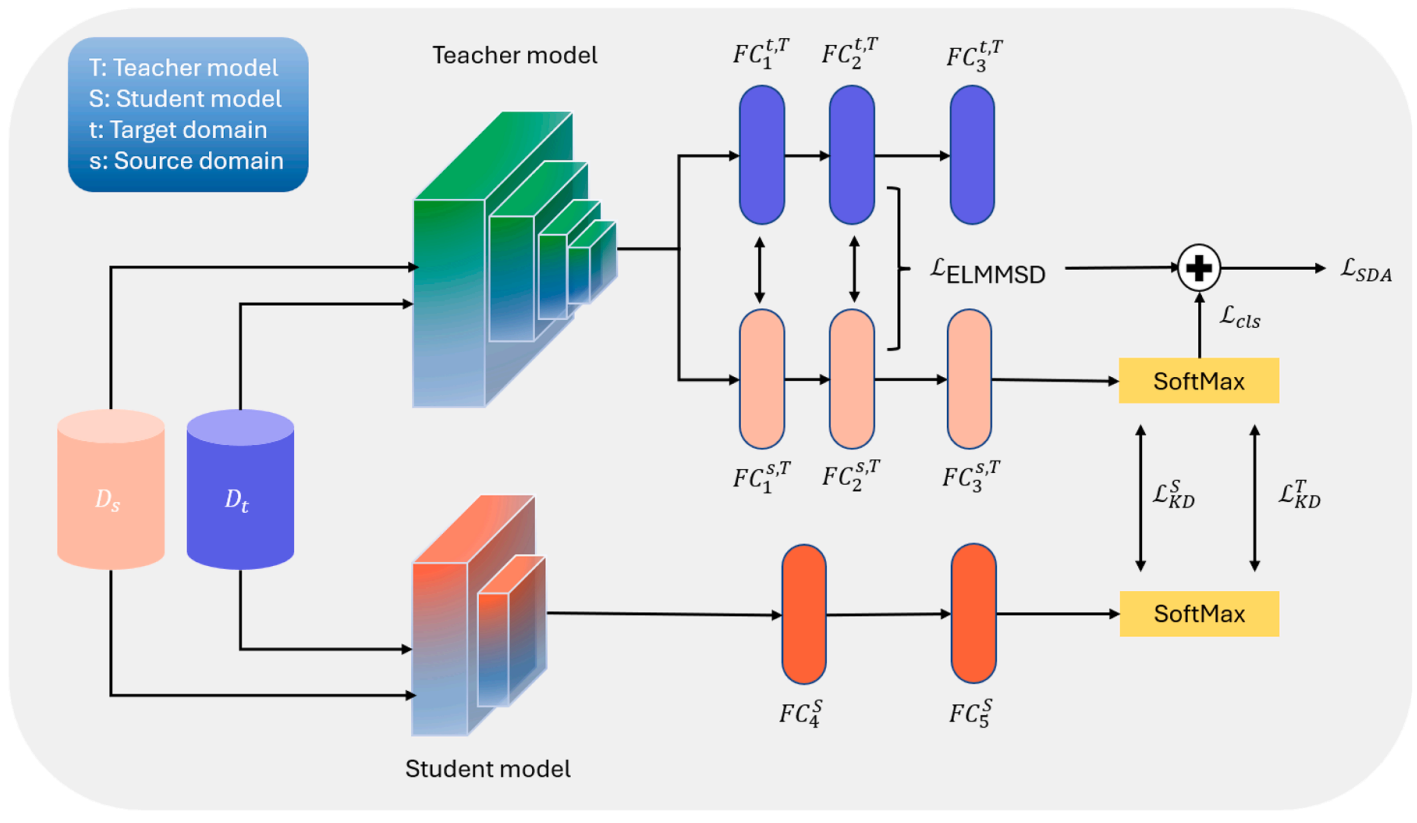
Knowledge Distillation and Enhanced Subdomain Adaptation Using Graph Convolutional Network for Resource-Constrained Fault Diagnosis
Kavianpour, M., Kavianpour, P., Ramezani, A., & Beheshti, M. (2025).
Knowledge-Based Systems, Elsevier. [Q1, IF: 7.6]
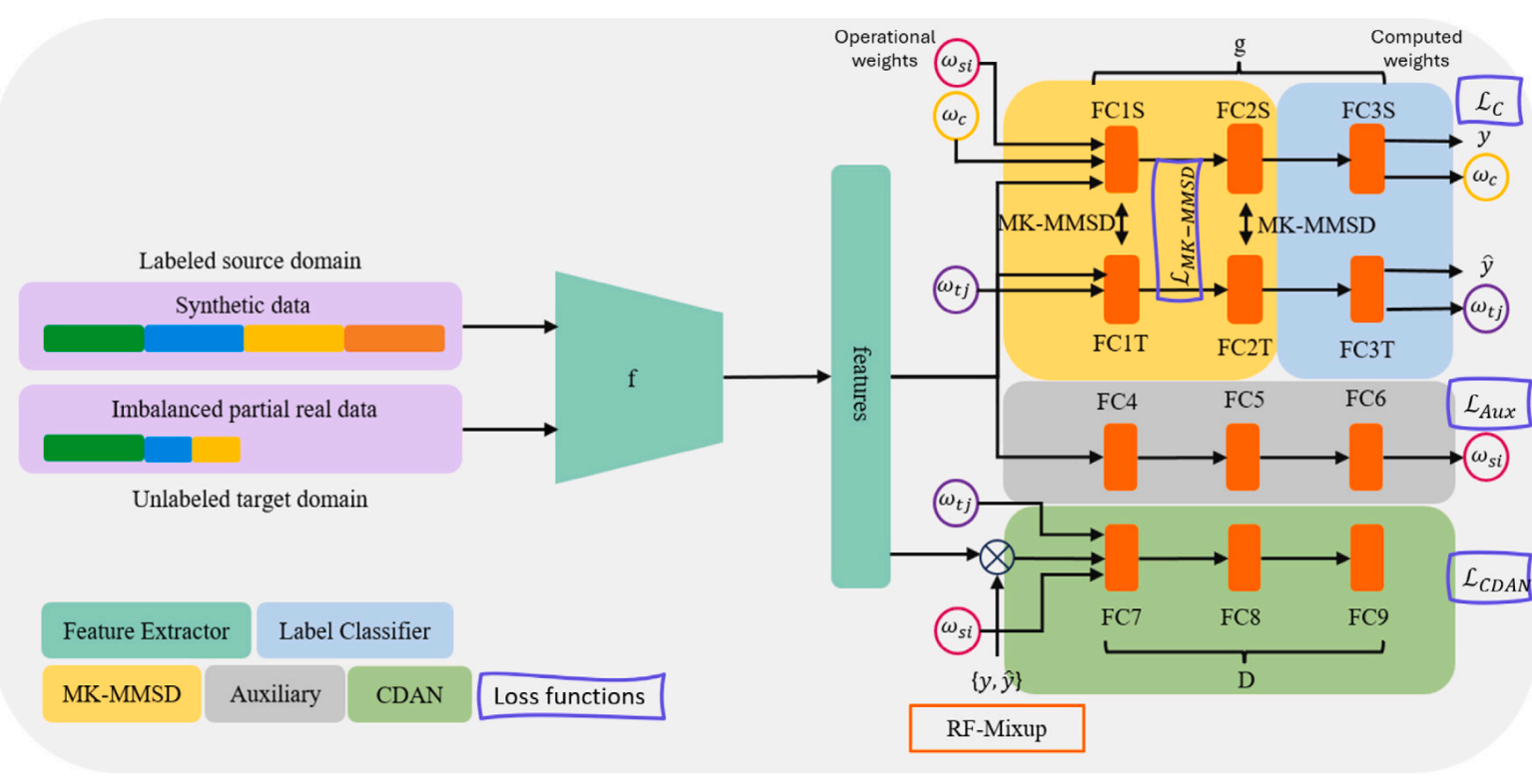
A Partial-Imbalance Robust Domain Adaptation Framework for Bearing Fault Diagnosis using Physics-Informed Deep Learning
Kavianpour, M., & Kavianpour, P., Ramezani, A. (2025).
Measurement, Elsevier. [Q1, IF: 5.6]
Deep Multi-scale Dilated Convolution Neural Network with Attention Mechanism: A Novel Method for Earthquake Magnitude Classification
Kavianpour, P., Kavianpour, M., & Ramezani, A. (2022).
8th International Conference on Signal Processing and Intelligent Systems (ICSPIS), IEEE.
Earthquake Magnitude Prediction using Spatio-temporal Features Learning Based on a Hybrid CNN-BILSTM Model
Kavianpour, P., Kavianpour, M., Jahani, E., & Ramezani, A. (2021).
7th International Conference on Signal Processing and Intelligent Systems (ICSPIS), IEEE.
An Intelligent Gearbox Fault Diagnosis under Different Operating Conditions using Adversarial Domain Adaptation
Kavianpour, M., Ghorvei, M., Kavianpour, P., Ramezani, A., & Beheshti, M. T. H. (2022).
8th International Conference on Control, Instrumentation and Automation (ICCIA), IEEE.
Experience
Feb. 2022 - Present
Research Assistant (Part-Time)
Tarbiat Modares University (Advanced Control System Lab)
- Developed advanced graph-based learning models and efficient deep neural networks for reliability assessment in safety-critical systems.
- Investigated physics-aware and adversarial learning approaches to build robust AI models under highly incomplete and weakly-labeled industrial data.
- This research directly resulted in two Q1 journal publications in `Knowledge-Based Systems` and `Measurement`.
Sep. 2024 - Sep. 2025
Senior AI Research Developer
Haf Hashtad (780)
- Architected a pipeline using GPT API to crawl, summarize, and analyze sentiment of public reviews, then paraphrased feedback into unique testimonials, boosting user trust.
- Implemented automated social media monitoring (Twitter, Telegram) using n8n to analyze competitors.
- Designed and deployed a RAG-based FAQ chatbot, reducing CRM support tickets by 43% and achieving over 75% user satisfaction.
Jul. 2023 - Sep. 2024
Senior AI Research Developer
Hesse Tazegi Company
- Designed and implemented a hybrid recommender system (collaborative filtering & content-based) to enhance user engagement.
- Deployed a Question-Answering system using a fine-tuned BERT model, significantly reducing customer service response times.
Sep. 2018 - Feb. 2022
Research & Teaching Assistant
University of Mazandaran (Earthquake Lab)
- Led M.Sc. thesis research applying novel deep learning models to seismic time-series prediction, producing 3 papers.
- Served as TA for M.Sc. level courses in Soft Computing and Optimization.
Teaching & Workshops
I am passionate about teaching and mentoring. I have experience as both a graduate Teaching Assistant and as an instructor for student-led workshops.
Soft Computing
Teaching Assistant (M.Sc. Level)
Assisted graduate students with concepts in fuzzy logic, neural networks, and evolutionary computation. Graded assignments and led practical lab sessions.
Optimization
Teaching Assistant (M.Sc. Level)
Guided students through classical and heuristic optimization algorithms (e.g., Genetic Algorithms, PSO). Helped debug and implement algorithms in MATLAB.
Introduction to Machine Learning
Workshop Instructor (2-Month Course)
Developed and delivered a 2-month workshop on fundamental ML concepts for the university's scientific association.
Python Programming
Workshop Instructor (2-Month Course)
Led a practical 2-month programming course for students, focusing on Python for data analysis and scientific computing.
Professional Service
Scientific Reviewer
(2022 – Present)
Served as a reviewer for several high-impact journals, including:
- Measurement (Elsevier)
- Expert Systems with Applications (Elsevier)
- Engineering Applications of Artificial Intelligence (Elsevier)
- IEEE Transactions on Industrial Electronics
- IEEE Transactions on Instrumentation and Measurement
Selected Projects
MediChat-RAG: Medical Conversational AI
Developed a stateful medical chatbot using LangChain and GPT-40-mini. Implemented a Retrieval-Augmented Generation (RAG) pipeline to query a medical knowledge base, enabling the bot to provide context-aware and accurate responses.
Xsum-FlanT5: Efficient Summarization
Fine-tuned a FLAN-T5 model for high-performance news summarization on the XSum dataset. Utilized parameter-efficient fine-tuning (PEFT) techniques (LoRA) to dramatically reduce computational costs while achieving competitive scores.
AI-Plan-Generator: Personalized Agent
Built an autonomous agent using LangChain and OpenAI API. The agent intelligently processes user goals (e.g., "lose weight") to generate customized, actionable weekly workout routines and meal plans.
Named-Entity-Recognition (NER)
Developed and trained a custom NER model to identify and extract specific entities (e.g., locations, organizations, technical terms) from unstructured text, a core task in advanced information retrieval and NLP pipelines.
Education
M.Sc. in Civil Engineering - Earthquake Engineering
University of Mazandaran
Sep. 2018 - Feb. 2022
Thesis: Earthquake Prediction Using Deep Learning: A Spatiotemporal Time-Series Analysis. (GPA: 19.5/20)
Awards: The Best Thesis of the Year in the Civil Engineering Department (2021).
B.Sc. in Civil Engineering - Structural Engineering
Allameh Mohades Nouri University
Sep. 2013 - Sep. 2018
Thesis: Evaluation of Seismic Behavior of Steel Structures Equipped with Metal Dampers. (GPA: 19.5/20)
Skills
Key Technologies & Frameworks
 Python
 PyTorch
 TensorFlow
 Hugging Face
 Scikit-learn
 LangChain
 Docker
 SQL
SQL
 Git
Git
 MATLAB